Genomics has moved well beyond being a new technology in dairy breeding. Today, the question is no longer whether genomics works but whether farms have the right infrastructure, strategy and decision-making processes in place to make it deliver.
Cogent Breeding is continuing to invest in genomics with a clear focus: ensuring farmers can go beyond simply collecting data, to using it to make earlier, more accurate and more commercially relevant decisions.
From genomic data to better decisions
Genomics enables farmers to see more of an animal’s genetic potential at an earlier stage, going beyond pedigree to highlight differences between animals, even within the same family.
This early insight creates opportunities to make more informed decisions around breeding, rearing and replacement strategy.
However, the value of genomics is not created by the test alone.
“Genomics is a powerful tool, but its real impact comes from how it’s used within the system on farm,” explains Will Barber, Dairy and Genomics Manager at Cogent. “Our investment has been focused on making genomic testing practical and accessible, while ensuring the information can be turned into meaningful action.”
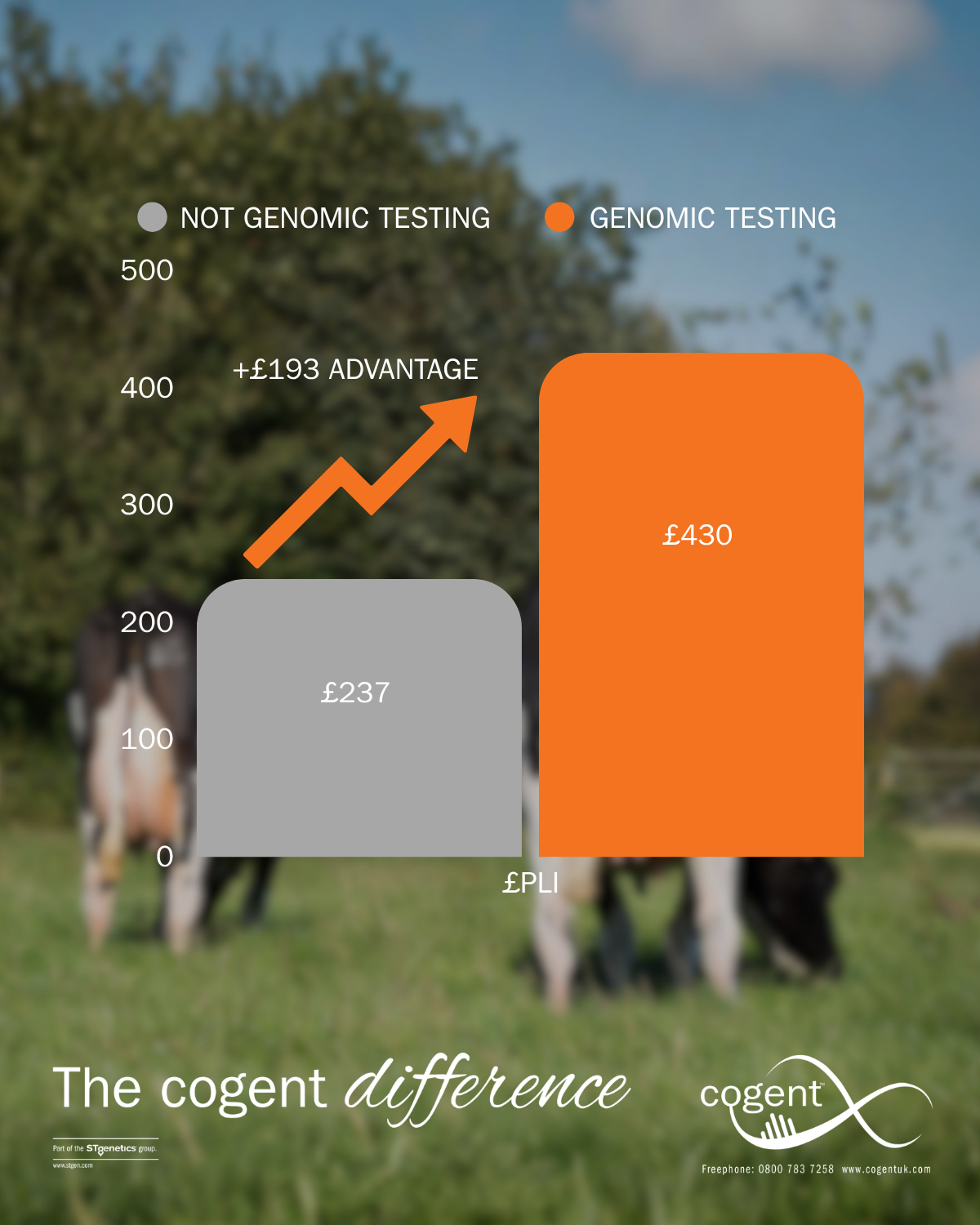
Industry data reflects the growing role genomics is playing. AHDB figures from 2024 show testing across UK dairy herds increased by 19%, with fully testing herds achieving an average Profitable Lifetime Index (PLI) of £430 compared to £237 in less-engaged herds; a £193 advantage.
Building the right foundations
For genomics to deliver consistent value, it must sit on strong farm infrastructure. This includes:
- Accurate animal identification
- Reliable data capture
- Milk recording
- Fertility information
- Health records
- Parentage verification
- Clear processes for acting on results
Without these foundations, genomic data risks becoming another dataset that is collected but not fully used.
Will adds: “The farms that see the most benefit are those with the right processes in place. Genomics becomes far more powerful when it’s supported by good records, clear systems and a plan for making decisions.”
Aligning genomics with breeding strategy
Every dairy business operates with different objectives; whether focused on milk solids, fertility, longevity, health, type, feed efficiency or meeting specific milk contract requirements.
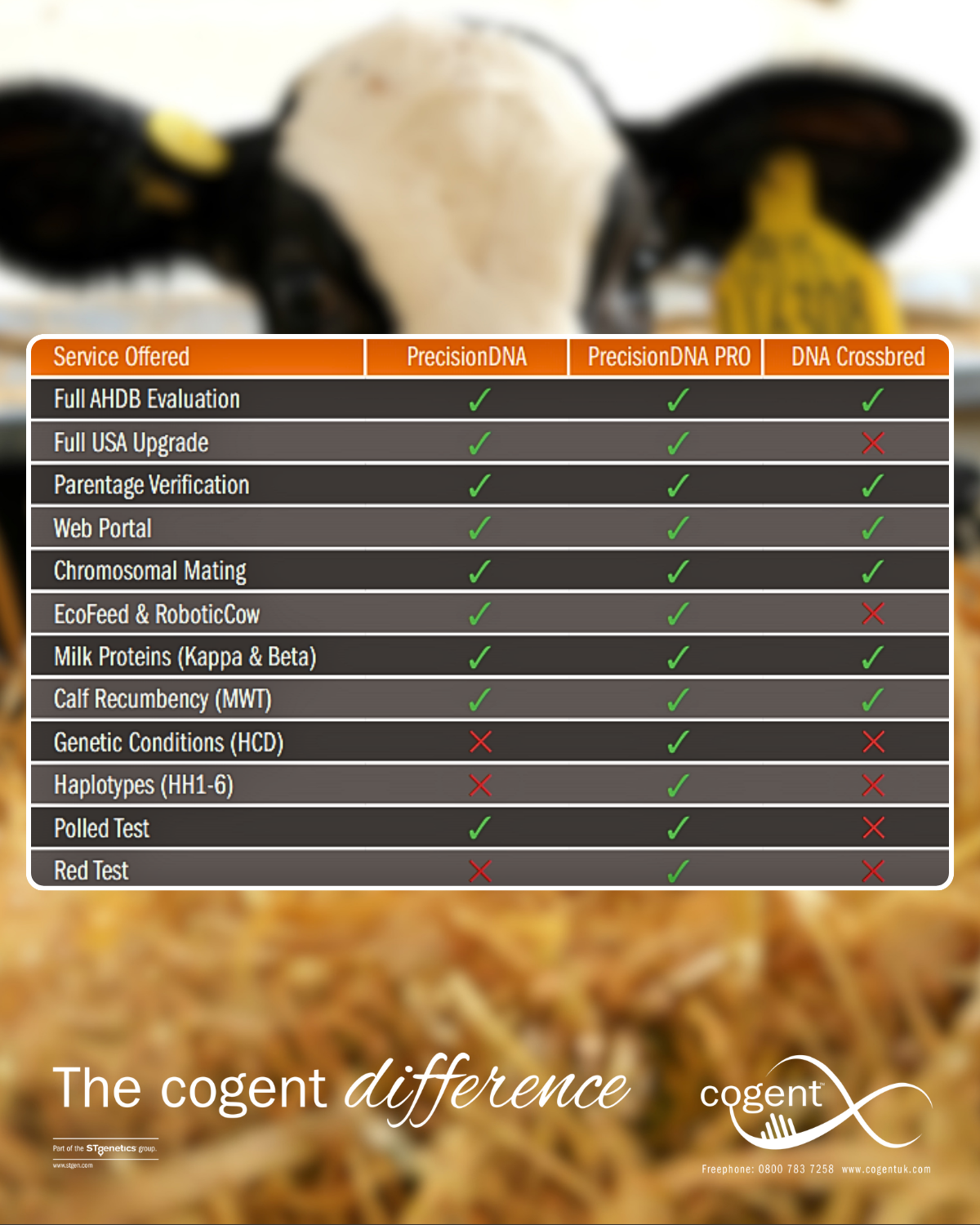
Genomics delivers the greatest value when interpreted within this context. Cogent’s PrecisionDNA service enables farmers to align genomic insight directly with their breeding goals, supported by:
- Flexible testing options (DNA, Pro, Crossbred)
- Clear results via a user-friendly STrategy™ portal
- Customised indexes based on individual farm priorities
“Genomic data is just the starting point,” says Megan Ellis, Genetic Services Manager at Cogent. “Our role is to work with farmers to interpret what the information means for their herd and translate it into a clear breeding strategy.”
This allows farmers to make more targeted decisions, including:
- Which animals should breed the next generation
- Where to use sexed semen
- Which cows are better suited to beef
- How to optimise replacement numbers
Connecting genetics with real-world performance
A key focus of Cogent’s ongoing investment is improving integration; linking genomic information with real on-farm performance.
By connecting farm data, such as specified below, farmers can begin to close the gap between genetic potential and actual results:
- Milk production records
- Fertility outcomes
- Health events
- Classification data
- Commercial performance
This creates a valuable feedback loop, allowing breeding strategies to be reviewed, refined and improved over time.
A complete, integrated service: You define your goals, we design the plan
Cogent’s approach is built around delivering a seamless, end-to-end system.
From birth to breeding:
- Calves can be tested using tag & test or tissue sampling units
- Results are delivered clearly through the STrategy™ portal
- Genetic strengths and weaknesses are identified
- Genetic Services Specialists provide ongoing support and breeding decisions based on the herd’s objectives
- Tailored mating and breeding plans are created
Advanced tools, including Chromosomal Mating and STrategy™, further strengthen the link between genomic insight and practical decision-making.
“Independent genomic testing can provide data,” says Megan. “What we focus on is ensuring that data leads to clear, confident decisions through structured support on farm.”
Genomics as part of a wider system
Cogent is clear that genomics should not be viewed as a standalone solution.
Its impact is maximised when combined with strong herd management fundamentals, including:
- Fertility management
- Nutrition and transition performance
- Cow health and comfort
- Effective reproductive planning
“Genomics is one cog in the wheel,” Will adds. “It strengthens decision-making, but it works best when everything else is working well too.”
Maximising the value of every heifer
For youngstock management, genomics creates a significant opportunity.
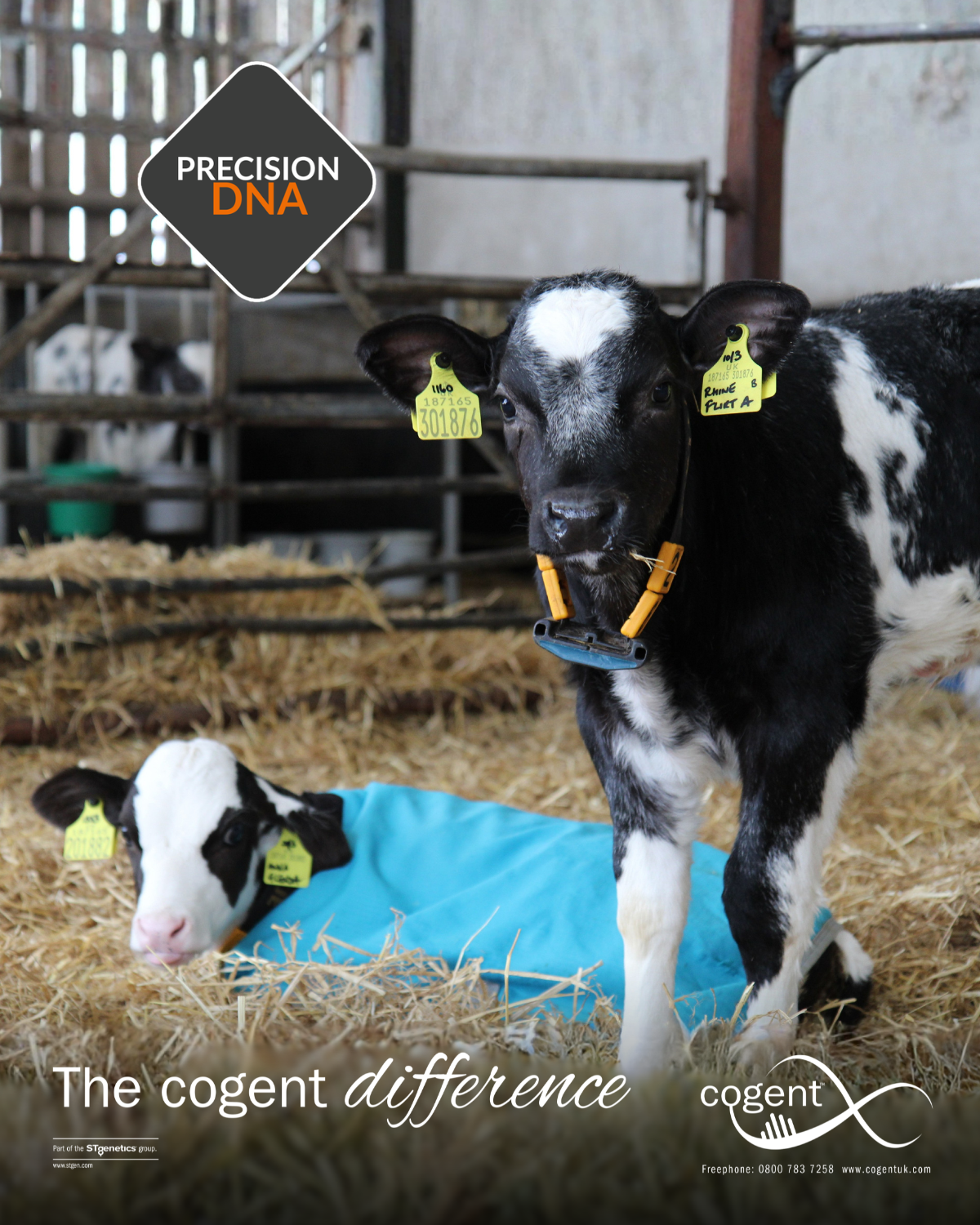
Every heifer calf represents an investment in feed, labour, housing and time. By understanding genetic potential earlier, farmers can make more targeted decisions about how each animal fits into the future herd.
This helps:
- Reduce the cost of rearing low-value animals
- Improve replacement selection
- Increase overall herd efficiency
When combined with a clear breeding strategy and strong management, genomics supports the development of herds that are more profitable, resilient and better suited to individual systems.
From information to improvement
Cogent’s continued investment in genomics reflects a broader shift in the industry; from purely collecting information to using it more effectively.
Will concludes: “The next stage of dairy genetics isn’t about generating more data. It’s about using the data we have more effectively. Farms that succeed will be those with clear goals, strong systems and the discipline to act on the information available.”
Ultimately, genomics, breeding strategy and real-world performance data must work together - not just to inform decisions but to improve them. With the right infrastructure, the right support and a clear plan, genomics becomes more than a tool - it becomes a key driver of long-term herd progress.