Robotic milking has changed the way many dairy farmers think about cow selection. It is no longer enough to focus on yield alone; the cows that perform best in an automated system are the ones that fit the robot as well as the herd.
Anyone running robots will recognise the contrast. Some cows walk in calmly, attach first time, milk out efficiently and leave. Others take repeated attachment attempts, spend too long in the box, and still fail to make the best use of the system.
That difference is not just about management. A significant part of it is genetic, which is why robotic suitability deserves a place in breeding decisions alongside production, health and fertility. STgenetics, Cogent’s parent company, has developed the Robotic Cow Index (RCI) to help farmers identify and breed cows that are better suited to automated milking systems.
What Makes a Good Robot-Ready Cow?
Teat length and placement matter, but they are only part of the picture. A good robot cow needs to be easy for the system to find and attach to, and she needs to perform well every time she enters the box.
In practice, a truly robot-ready cow should do several things consistently, every single day:
- Walk to the robot willingly and fit well within voluntary traffic systems
- Stand calmly so attachment can happen quickly and reliably
- Attach efficiently with fewer retries and less lost time
- Milk out well without unnecessary delays in the box
- Return at appropriate intervals to support throughput and routine herd management
When you look at cows through that lens, it becomes clear that robot suitability is about function as much as appearance. The best robot cows are the ones that make life easier for the robot and the farmer.
Introducing RCI: Breeding for Robotic Performance
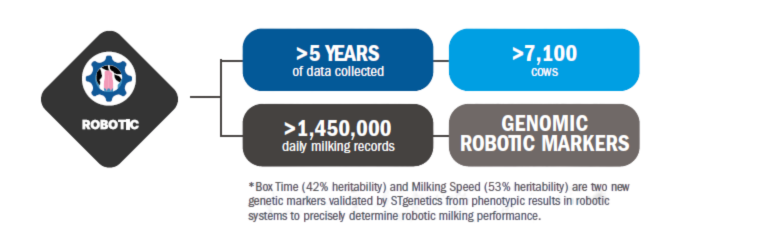
RCI is the only index built from on-farm robotic milking performance data and is designed to help farmers breed cows that perform more efficiently in robotic systems. The index brings together the traits that matter most in an automated setup, rather than relying on appearance alone. By combining genetic markers, laser-based Robotic Milking data, and proprietary genomic evaluations, farmers can now identify efficient, high-producing cows with strong attachment, calm milking behaviour, and consistent milk-out.
The data behind RCI includes millions of daily robotic milking records collected from herds in the USA, UK, France and Australia, building on earlier data from STgenetics’ Ohio Heifer Center and partner farms. That gives the index a practical foundation in real robotic milking environments.
The Traits That Matter Most
RCI combines key traits linked to robot efficiency, including milking speed, box time, effective milking speed, udder conformation and mastitis-related health measures.
Milking Speed
Milking speed reflects how efficiently a cow milks out. There is relatively high heritability for this trait, meaning it is a practical area for genetic progress. In a robotic system, cows that milk efficiently can help improve throughput and make better use of each robot.
Box Time
Box time is the total time a cow spends in the robot, from entry to exit, including identification, preparation, attachment, milking and exit. Lower box time, all else being equal, supports better robot capacity and smoother herd flow. This trait is also meaningfully heritable.
Effective Milking Speed
Effective milking speed brings yield and time together by looking at how much milk is produced per minute of box time. It offers a useful measure of how efficiently a cow converts robot time into output.
Udder and Teat Traits
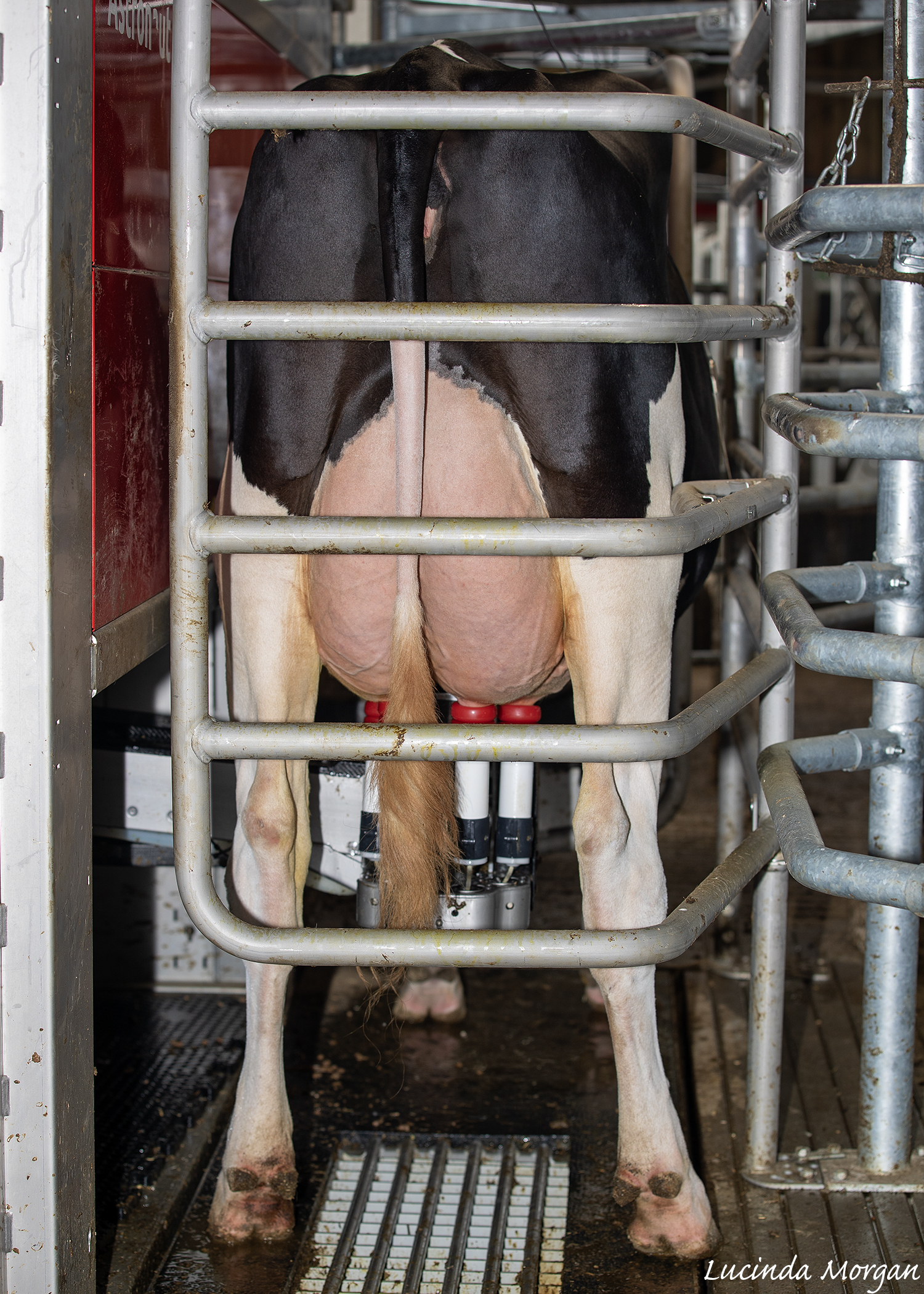
Teat length and front and rear teat placement remain important because they directly affect how easily the robot can locate and attach. Good udder structure supports smooth attachment and helps reduce wasted time before milking begins.
Health and Mastitis Resistance
Health traits also matter in robotic systems. Mastitis-related measures are included within RCI, reflecting the fact that robot efficiency and udder health are closely linked.
What to Look for in the Shed
When you are watching a robotic system run, the best cows are often easy to spot.
She comes in on her own. A good robot cow moves willingly to the box and fits the routine without repeated fetching.
She stands calmly and attaches smoothly. Calm behaviour, good teat placement and consistent positioning all help the robot do its job quickly and reliably.
She milks out efficiently and leaves without delay. Efficient visits help improve throughput and keep the system moving for the next cow.
She walks comfortably. Good feet and legs matter in any system, but they are especially important where cows need to move voluntarily to the robot.
She fits the rhythm of the herd. Regular visits, calm behaviour and efficient milking all contribute to a more predictable and easier-to-manage system.
Why Robot Suitability Matters
In a robotic system, small differences add up quickly. A single awkward cow may be manageable, but at herd level those inefficiencies can affect throughput, labour and overall system performance.
When attachment failures increase, box times stretch out or too many cows need fetching, the system becomes harder to manage. That can mean more labour, lost capacity or pressure to invest further before the current setup is performing at its best.
Breeding for better robotic suitability can help improve this over time. A herd that is easier to attach, quicker through the box and more consistent in behaviour is likely to support a smoother working day for both cows and staff.
Building the Next Generation of Robot-Ready Cows
The real value of RCI is in long-term herd improvement. By selecting genetics with robotic performance in mind, farmers can gradually build a herd that is better suited to the way they milk now and in the future.
Because key robot-efficiency traits show meaningful heritability, selecting sires with stronger robotic credentials can support measurable progress across generations. The aim is not to replace existing breeding priorities, but to add robotic suitability to the picture.
That matters more as automation becomes more common. The right breeding decisions today can help create a herd that is easier to manage, more efficient in the robot and better aligned with the long-term goals of the business.
The Bottom Line
Choosing cows for robotic milking is about more than teat length or udder shape. The best robot cows are the ones that work well in the system: they attach smoothly, milk efficiently, move calmly and help keep the robot running at its best.
Robotic Cow Index (RCI) is designed to support that approach by bringing together the traits that matter most in robotic milking. For farmers investing in automation, it offers a more practical way to think about the cows of the future.
Have you seen the dedicated section to Robotic Cow Index Bulls in our latest catalogue?
You can find some of the outstanding sires on pages 12-14.
Talk to your local Cogent Genetics Consultant about which robot-ready sires best fit your herd goals and breeding strategy or call 0800 783 7258 for free.